Alliance Paradigm 310RL Rear Wall Repair: What We Found and Fixed
An Alliance Paradigm 310RL rear wall repair sounds like the kind of problem you hope never shows up. For us, it did. We found the issue after pulling out the rear sofa and seeing that the angle iron bracket had separated from the wall and pulled out the oversized screws I had installed the previous season.
This post is for owners who want a clearer picture of what rear wall separation can look like, what the repair actually involved, and what to check before panic takes over.
How We Found the Rear Wall Separation
The problem showed up once we removed the rear sofa and looked behind it. That is where we found the angle iron bracket separated from the wall. From there, the repair turned into more than just replacing a few screws. We needed to inspect how far the separation had spread and whether the rear wall could be pulled back into position.
That is the first useful lesson here. If something feels loose or off in the rear wall area, do not assume it is only trim or furniture movement. Look deeper.
What the Damage Looked Like
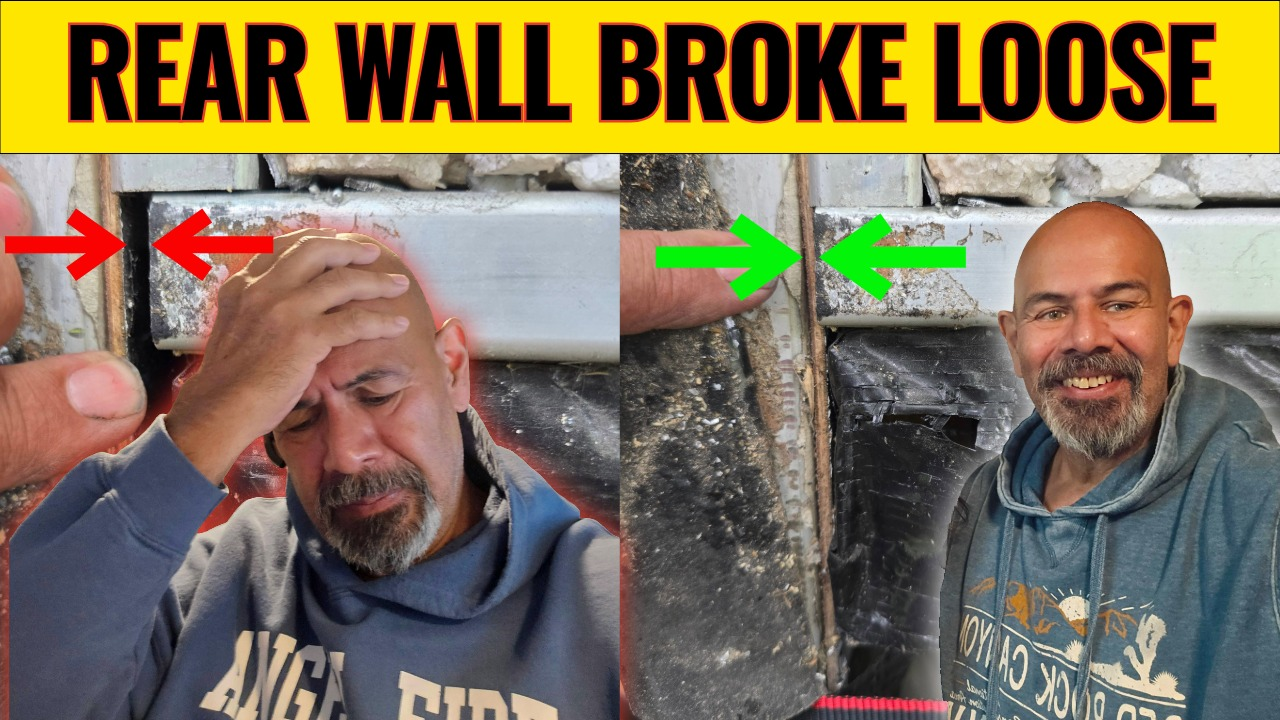
Once we moved outside and removed the rear panels, we could see the door-side wall had separated by about half an inch. That is when the problem became easier to understand. The wall was no longer where it was supposed to be, and the inside bracket issue was only part of the bigger repair.
- Bracket separation behind the sofa
- Pulled-out screws
- Visible wall gap from the exterior side
- Need to realign the wall before reinforcing it
This matters because the inside and outside parts of the repair work together. Fixing only the bracket would not have solved the full problem.
What Alliance Did That Helped
One of the biggest positives in this repair was support from Alliance. Even though the rig was out of frame warranty, they provided repair guidance, helpful videos, and support toward labor and materials. That does not remove the frustration of the problem, but it does matter when you are trying to figure out the right repair path.
That is worth saying plainly. Support after the sale changes the ownership experience when something structural shows up.
How We Pulled the Wall Back Into Place
The main turning point was using the ratchet strap method recommended by Alliance. That let us pull the rear wall back into position before securing it again. Once the gap was closed, we used long structural screws through the back trim into the subfloor on both sides to hold the wall where it belonged.
This part of the repair matters most. If the wall is still out of position, reinforcement alone is not the full fix.
How We Reinforced the Inside
After the wall was back in place, the inside bracket still needed more holding power. We drilled out the old holes for rivets, added more holes between the original ones, and re-secured the bracket with more fasteners. Then we added oversized screws for more strength before reinstalling the sofa.
That is what turned this from a temporary patch into a more complete repair.
What Other Owners Should Check First
If you own a rear living fifth wheel and something feels off in the back wall area, start simple. Check for movement behind the rear sofa. Look for pulled screws, bracket separation, unusual gaps, or any sign the wall is not sitting where it should.
- Check behind the rear sofa
- Look for bracket movement or pulled screws
- Inspect the exterior rear wall for visible separation
- Do not assume the issue is cosmetic until you verify it
The earlier you catch something like this, the easier the repair path may be.
What This Repair Taught Us
The biggest lesson is that a structural-looking problem does not always mean you are out of options. It does mean you need to slow down, understand the full issue, and avoid treating the first visible symptom as the whole repair.
It also reminded us that good support and clear repair steps matter just as much as tools when a bigger RV problem shows up.
Who This Post Fits Best
This is most useful for Alliance Paradigm owners, rear living fifth wheel owners, and DIY RVers trying to understand what rear wall separation can look like before they commit to a repair plan. It is especially useful if you have seen movement near the rear sofa or back wall and are not sure how serious it is yet.
Our Bottom Line
Yes, this repair was frustrating, but it was fixable. The key was finding the full problem, pulling the wall back into place, and reinforcing both the outside and inside parts of the affected area. That is what gave us confidence putting everything back together.
Final Thoughts
If you think your rear wall may be separating, do not ignore it and do not jump straight to a cosmetic fix. Inspect it carefully, confirm where the movement is coming from, and make sure the wall is back where it belongs before you reinforce anything. That is the smarter path.
Watch the full YouTube video here: How to Repair Rear Wall Separation on an Alliance Paradigm 310RL
Want more practical owner fixes? Read our other Alliance-specific repair and upgrade posts before your next project.
Related posts:
- Alliance Paradigm 310RL Review After 4 Years: What Held Up and What Broke
- SumoSprings Install Mistake That Cost Me $170
- RV Travel Day Checklist After 5 Months at a Seasonal Site